
Imagine this: You’re in a vibrant suburb of Nairobi, a cozy home in Kampala, or a budding tech hub in Kigali. You settle in for the evening, ready to stream the big football match, catch the latest Nigerian film, or tune into an international news channel. But instead of the seamless experience you crave, you’re met with the dreaded spinning buffer wheel, pixelated images, or a complete connection drop. This has been the frustrating reality for countless entertainment seekers across East Africa, until now.
A powerful technological convergence is changing the game. On one side is IPTV, a sophisticated method of delivering television content. On the other is Starlink, a constellation of satellites blanketing the globe with high-speed internet. Individually, they are impressive. Combined, they are nothing short of revolutionary for regions where digital infrastructure has been a persistent challenge.
This article will serve as your comprehensive guide. We will demystify what IPTV truly is, explore its immense potential, and build a compelling case for why Starlink-powered IPTV is emerging as the best and most logical choice for viewers in East Africa. We’ll move from foundational concepts to practical insights, proving that the future of African home entertainment is not just arriving, it’s beaming down from the sky.
Before we champion the Starlink solution, we must first understand the core technology at play. IPTV is often lumped in with general internet streaming, but it is a distinct and more robust system.
Internet Protocol Television (IPTV) is exactly what its name suggests: television content delivered via the Internet Protocol (IP) networks that power the modern internet. Unlike traditional methods, terrestrial broadcasts (antenna), satellite dishes (DStv, GOtv), or cable, IPTV uses your broadband connection as its delivery highway.
The key differentiator lies in its architecture. Instead of broadcasting all channels at once in a one-way stream, IPTV sends only the channel you select directly to your device. Think of it as a dedicated, on-demand pipeline for your chosen content.
The journey of an IPTV channel to your screen involves several key players:
Misconception 1: “IPTV is just illegal streaming.” FALSE. While there are illegal, unlicensed IPTV services (often sold via shady websites offering “10,000 channels for $10”), legitimate, licensed IPTV is a fully legal and growing industry used by telecom giants and dedicated providers worldwide.
Misconception 2: “It’s the same as YouTube or Netflix.” NOT QUITE. While Netflix is a VoD service over IP, a full-fledged IPTV service typically integrates live TV, VoD, and catch-up into a unified, TV-like experience, often with a traditional channel-number structure.
Misconception 3: “It requires super-fast, flawless internet.” IT DEPENDS. A stable, consistent connection is more important than raw, bursty speed. This is where Starlink’s unique advantages come sharply into focus.
To appreciate the Starlink revolution, we must diagnose the problem it solves. East Africa’s digital journey has been one of remarkable mobile innovation but plagued by fixed-line inconsistencies.
The Traditional Internet Hurdles for IPTV
For IPTV to work well, it demands what we call a “low-latency, high-throughput, and stable” connection. Here’s how traditional options in the region often fall short:
Fiber-Optic: The Gold Standard, but Limited. Where available, fiber offers superb stability and speed. However, its reach is primarily confined to major urban centers and affluent suburbs. The cost of last-mile deployment across vast, geographically challenging areas has severely limited its penetration.
DSL & Fixed Wireless: The Unreliable Middle Ground. These services, often delivered via copper lines or local radio links, are more widespread but suffer from congestion, weather interference, and inconsistent speeds. Evening slowdowns when everyone is online can render IPTV unwatchable.
Mobile Data (4G/LTE): The Congested Highway. While mobile networks have achieved incredible coverage, they are designed for mobility and general browsing, not consistent high-bandwidth streaming. Data caps are restrictive, and network deprioritization during peak times leads to buffering, the arch-nemesis of live TV.
The Result? A frustrating gap between the desire for modern, on-demand, and diverse TV content and the ability of existing infrastructure to deliver it reliably. This gap isn’t just an inconvenience; it limits educational access, business information flow, and entertainment equity.
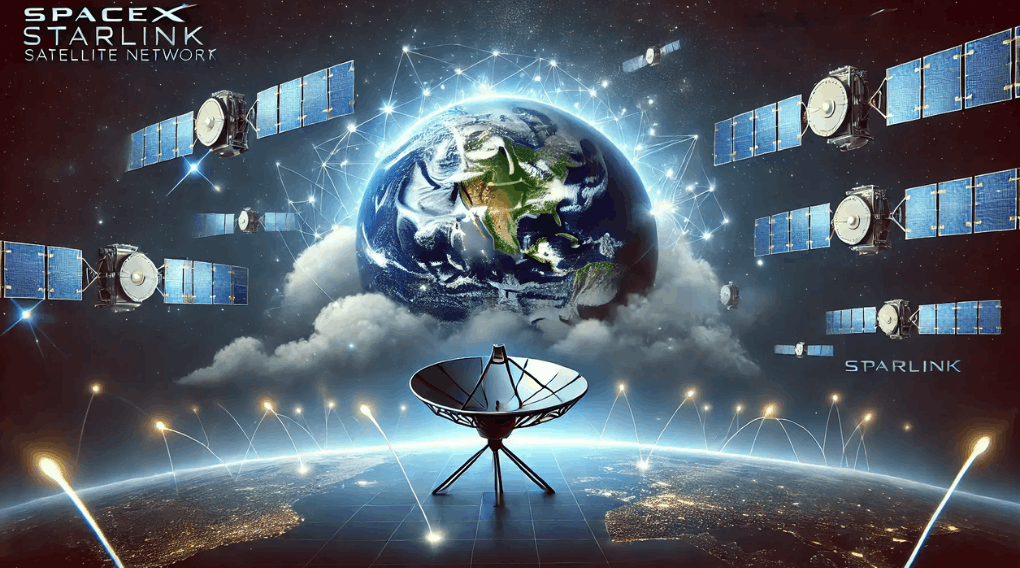
Enter Starlink, SpaceX’s ambitious project to create a global broadband network powered by a constellation of thousands of low-earth orbit (LEO) satellites.
Why Starlink is Different: The LEO Advantage
Traditional satellite internet (like Viasat) uses a handful of large satellites in geostationary orbit, ~35,786 km away. The immense distance causes high latency (600ms+), making real-time activities like gaming or seamless video calls difficult.
Starlink’s satellites operate at about 550 km. This lower orbit means:
Radically Lower Latency: Signal travel time is slashed to 20-50ms, comparable to good terrestrial connections. This is crucial for live IPTV and responsive menus.
High-Speed Potential: Users across East Africa consistently report download speeds between 50 Mbps and 200 Mbps, far exceeding national averages in most areas.
Global Coverage Ambition: Its design is to cover the entire planet, making it inherently unbiased towards urban centers.
The setup is famously simple: a compact, user-positionable satellite dish (“Dishy”), a router, and a clear view of the sky. For users in rural farms, peri-urban towns, or even cities with poor fixed-line options, the experience has been transformative:
From No Broadband to High-Speed: For many, it’s their first true broadband experience.
Consistency is Key: Perhaps its greatest advantage over mobile networks is its resistance to evening congestion. Your connection is not shared with thousands of local users but routed directly to the satellite network.
The Cost Factor: While the hardware cost (~KSh 89,000 in Kenya, ~UGX 2.8M in Uganda) and monthly subscription (~KSh 6,500 / ~UGX 240,000) are premium, they are increasingly viewed as a justifiable investment for businesses, serious remote workers, and households prioritizing reliable connectivity for work, education, and premium entertainment.
Now, we synthesize the two technologies. Using IPTV over a Starlink connection isn’t just a workaround; it creates a superior entertainment paradigm for the region.
This is the foremost argument. IPTV’s worst enemy is jitter (inconsistent packet delivery) and packet loss. Starlink’s direct-to-satellite link bypasses the congested and often undersea-cable-dependent terrestrial backhaul that plagues local ISPs. A thunderstorm might cause a brief “network issue” on Starlink, but it won’t suffer from the daily 7 PM slowdown that cripples IPTV on congested networks. For live sports or event viewing, this reliability is priceless.
Are you in a Nairobi high-rise, on the shores of Lake Victoria, or in the Ethiopian highlands? The quality of your IPTV service should not be determined by your ZIP code. Starlink makes high-fidelity IPTV a possibility anywhere with a clear sky view, democratizing access to digital media.
This is transformative for:
Rural Communities: Accessing educational channels, local news, and entertainment.
Expats & Diaspora: Connecting to home-country IPTV services without compromise.
Travelers & NGOs: Setting up temporary bases with full TV and internet capabilities.
The media world is moving relentlessly towards 4K (Ultra HD) and, eventually, 8K streaming. These formats require massive, consistent bandwidth. Starlink’s already high speeds and ongoing network upgrades position it perfectly to handle this data-hungry future, ensuring your IPTV setup won’t become obsolete.
Traditional satellite TV packages (like DStv) are often criticized for their rigid, expensive bundles where you pay for dozens of channels you never watch. The IPTV model, enabled by a robust pipe like Starlink, opens the door to more flexible, à la carte offerings. Providers can offer tailored African, European, Asian, or sports-focused packages at more competitive prices. The consumer wins with more control.
A Practical Scenario: The Premier League Weekend
On Traditional Mobile Broadband: You start the stream. It begins in HD, but as more people in your cell zone come online, it drops to pixelated SD, then buffers during a critical attack. You miss the goal.
On Starlink-Powered IPTV: You select the channel in 1080p or 4K. The stream starts instantly and maintains consistent quality throughout the 90 minutes, regardless of what your neighbors are doing online. The experience is smooth, immersive, and reliable.
Adopting this technology requires informed decisions to avoid common mistakes.
Choosing a Legitimate IPTV Provider
This is the most critical step. With Starlink handling the transport, your provider controls the content quality and legality.
Look for Transparency: Legitimate providers are clear about their company identity, location, and contact details.
Avoid “Too-Good-To-Be-True” Offers: 10,000+ channels for $5/month is almost certainly pirated. These services are unreliable, shut down frequently, and may pose security risks.
Seek Reviews and Trials: Look for community feedback from users within Africa. A reputable provider will often offer a 24-hour trial.
Content Focus: Many successful providers in the region focus on robust bundles of African channels (e.g., Kenyan, Nigerian, Ugandan, Tanzanian) alongside popular international news, sports, and entertainment.
The Latency Question: Is it Good Enough?
For live TV and VoD, Starlink’s 20-50ms latency is imperceptible and poses no issue. The streaming protocol (typically HLS or MPEG-DASH) buffers a few seconds ahead. The low latency ensures channel zapping (changing channels) is snappy, a marked improvement over high-latency traditional satellite internet.
The narrative of digital access in East Africa is being rewritten. We have moved from a discussion of scarcity and limitation to one of possibility and choice. IPTV represents the modern, flexible, and content-rich future of television. Starlink represents the first truly viable, high-performance internet backbone to deliver it equitably across the entire region.
Together, they form a synergistic solution that addresses the core historical challenges of reliability, coverage, and quality. This isn’t just about watching TV in higher definition. It’s about:
For the individual household, the business, or the institution in East Africa looking to build a future-proof entertainment and information system, the equation is becoming clear. While the initial investment is significant, the long-term value in reliability, quality, and freedom is unparalleled. The best choice for premium, dependable television is no longer found in a cable buried in the ground or a single satellite beam from afar. It’s found in a collaborative dance between a constellation in the sky and a box in your living room. The future of East African viewing is here, and it is brilliantly, powerfully connected.


Enjoy live TV, Movies, and Series in stunning HD and 4K quality. Unlimited Entertainment, Unmatched Quality!